Two weeks away, one dead snail, 60+ hitchhikers, and a blackout that actually worked. The tank survived—and so did we.
The Pea Soup Saga
When we left on December 19th, the tank had a mild algae problem. By December 30th, we were watching it turn into pea soup through the webcam—700 miles away with no way to do a water change.
The culprit? That fertilizer we added on Day 24. We knew it was a mistake at the time. We’re still paying for it.
Our remote fix: complete blackout. We turned off the lights on December 30th and left them off until today. Five days of total darkness to kill the suspended algae.
It worked.
Before and After
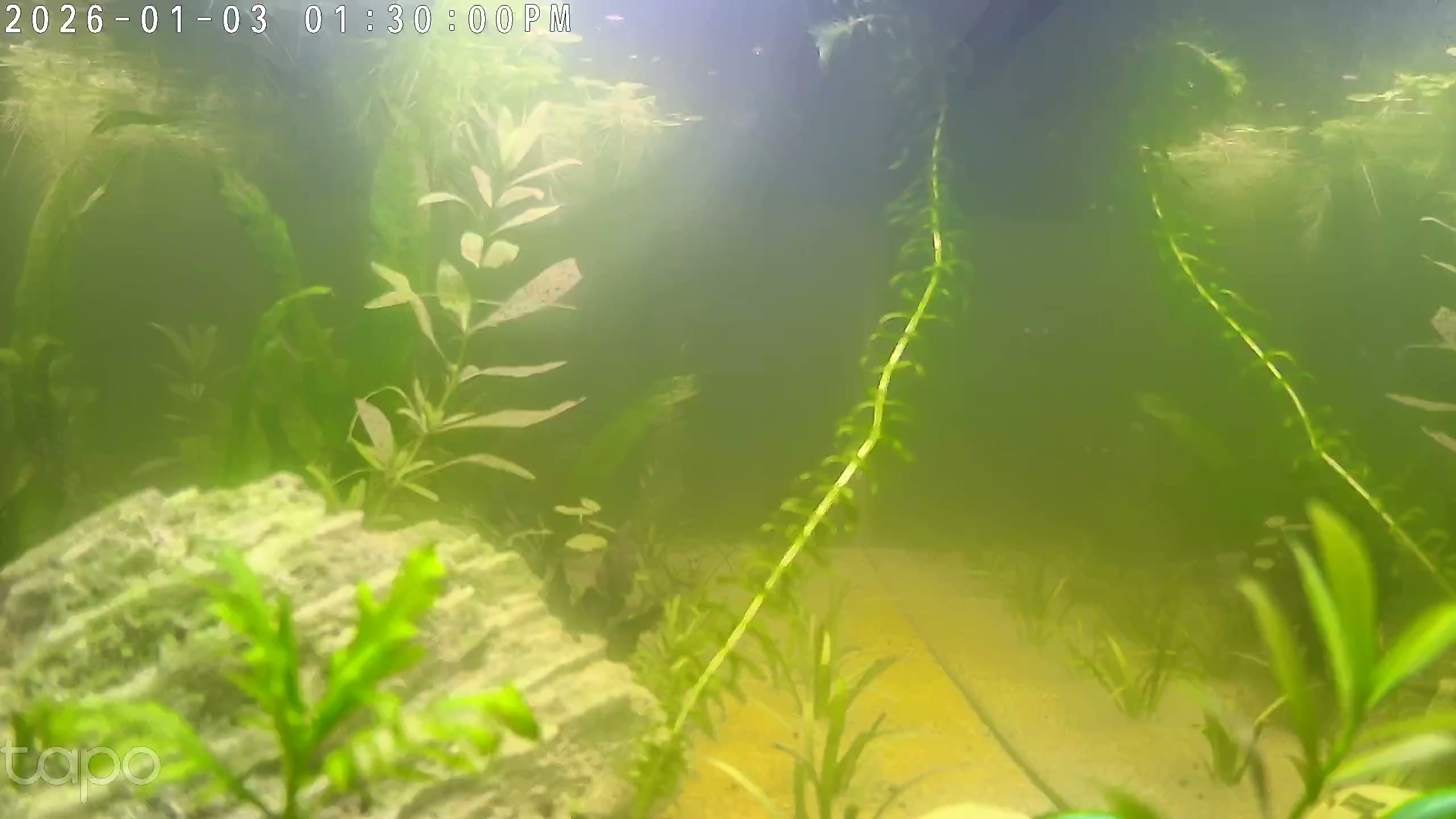
The difference is dramatic. On December 30th, we could barely see the coral through the green haze. Today, we can see the substrate, individual plants, and the full hardscape.
The water still has a slight green tint—remnants of the bloom—but it’s clearing. Between the blackout and the Water Lettuce explosion (more on that below), the suspended algae didn’t stand a chance.
What We Found
The Good
Cycle is rock solid. Ammonia 0, nitrite 0. The beneficial bacteria didn’t care about our two-week absence or the green water bloom. They just kept doing their job.
Plants went wild. The Water Lettuce didn’t just survive—it tripled. We left with maybe 8 plants covering a small corner. We came back to 24+ plants covering 50% of the surface. The other plants are thriving too: Hygrophila reaching for the light, Pennywort spreading, Dwarf Sagittaria filling in the foreground.
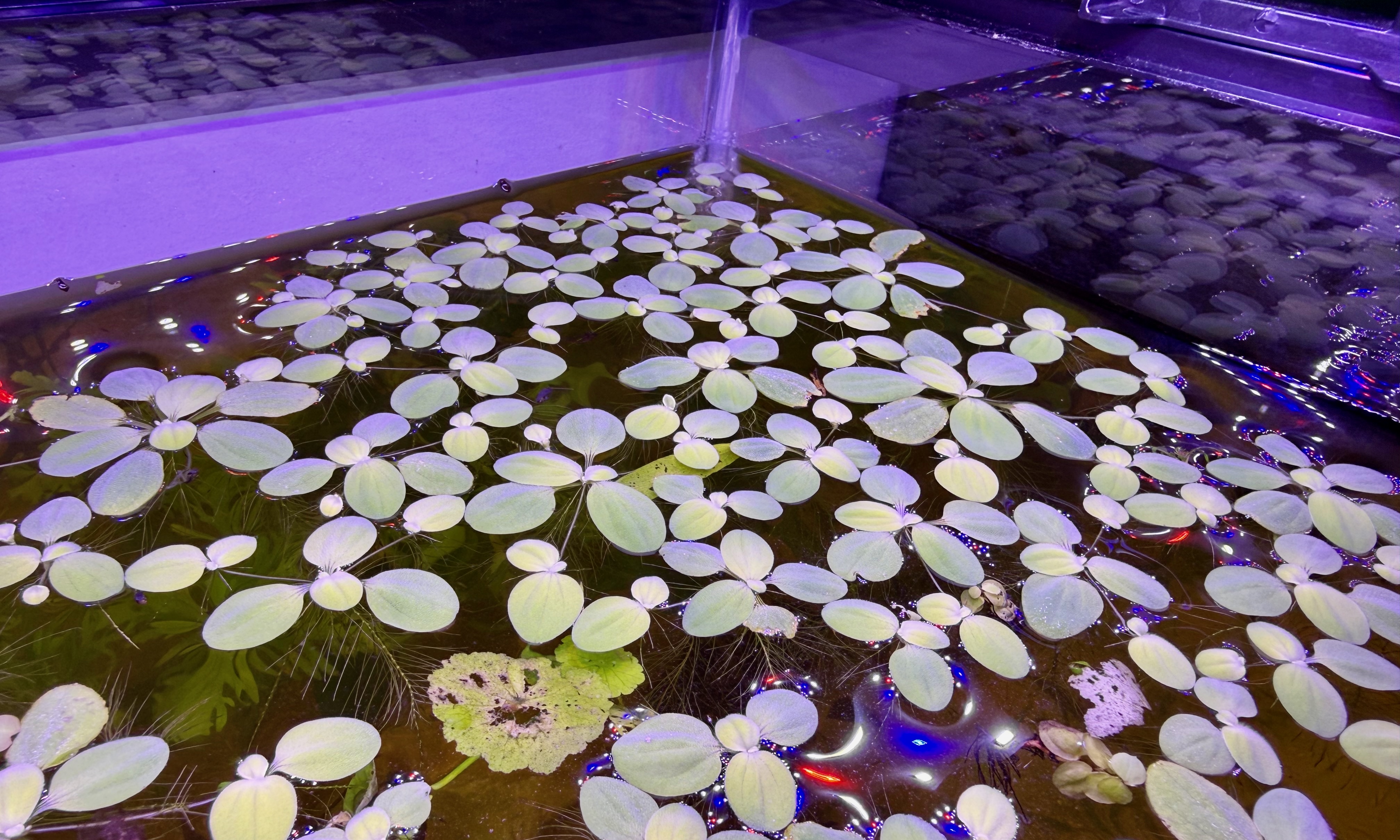
Water Lettuce explosion - from 8 plants to 24+, now covering half the surface
Temperature held steady. 75°F, right where we left it. The heater did its job despite 3 gallons of evaporation.
The Bad
Lost a nerite. Found one of our three nerites turned over and dead. This one had visible shell damage when we bought it—a crack near the apex. We suspected it might not make it long-term, and we were right. The other two are active and healthy.
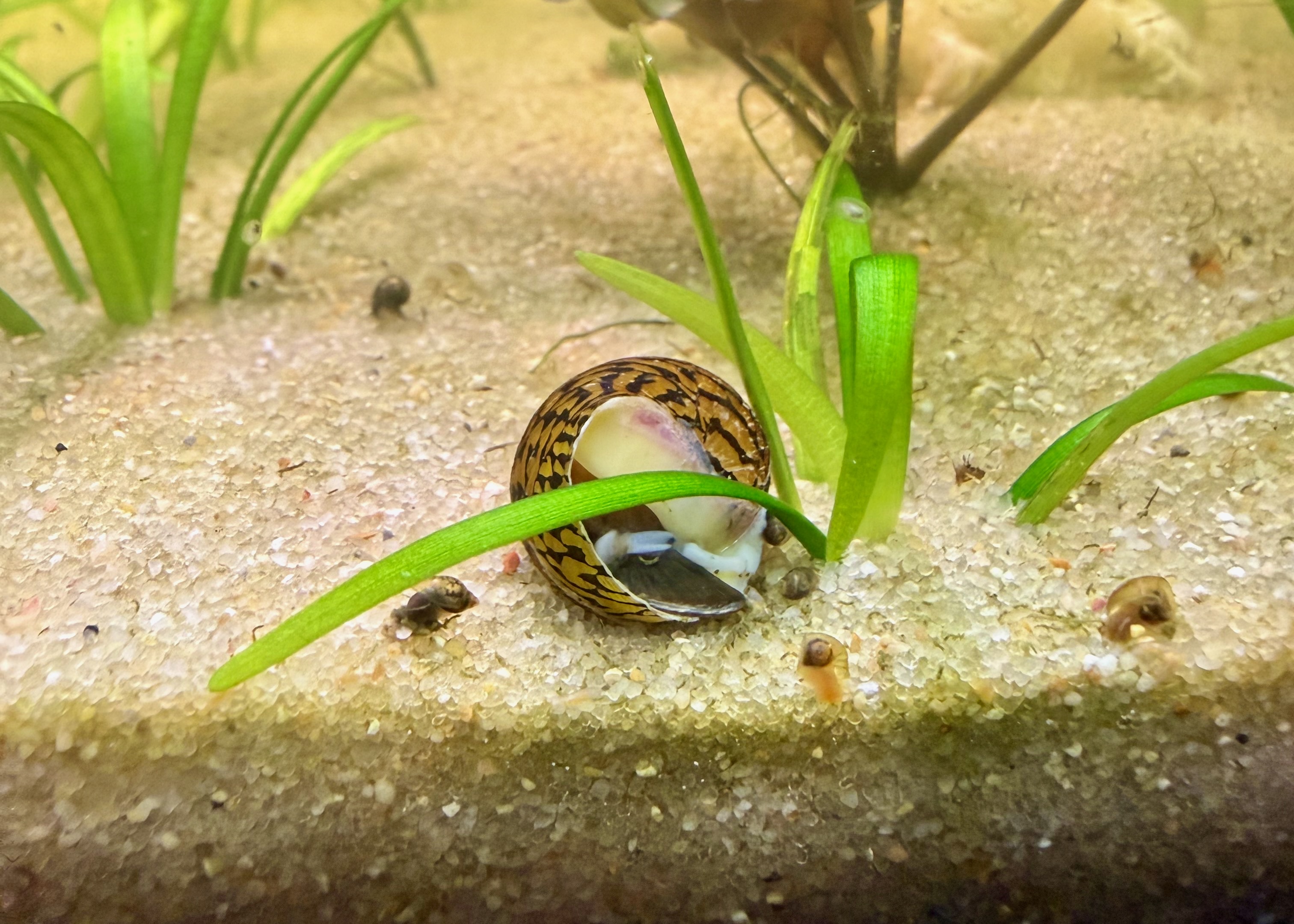
The nerite that didn’t make it - shell damage from purchase was likely the cause
Bladder snail explosion. We left with 40+. We came back to 60+. They’re everywhere—on the glass, on plants, on the coral. Some are now pea-sized, which means they’re approaching breeding age.
Time for population control.
The Neutral
Evaporation. Lost about 3 gallons over two weeks—enough that the circulation pump intake was above the water line. We topped off with conditioned water and restarted the pump. The heater stayed submerged (we positioned it at the bottom specifically for this reason).
The Snail Situation
Sixty bladder snails sounds alarming, but they’ve actually been helpful. During the green water bloom, they were probably the only things keeping algae off the glass and plants. Free labor.
But now that the bloom is clearing, we need to thin the herd before they start breeding exponentially. Our approach:
DIY snail trap: Container with holes, baited with bottom feeder food. Leave it overnight when snails are most active, remove in the morning, dump the catch, repeat.
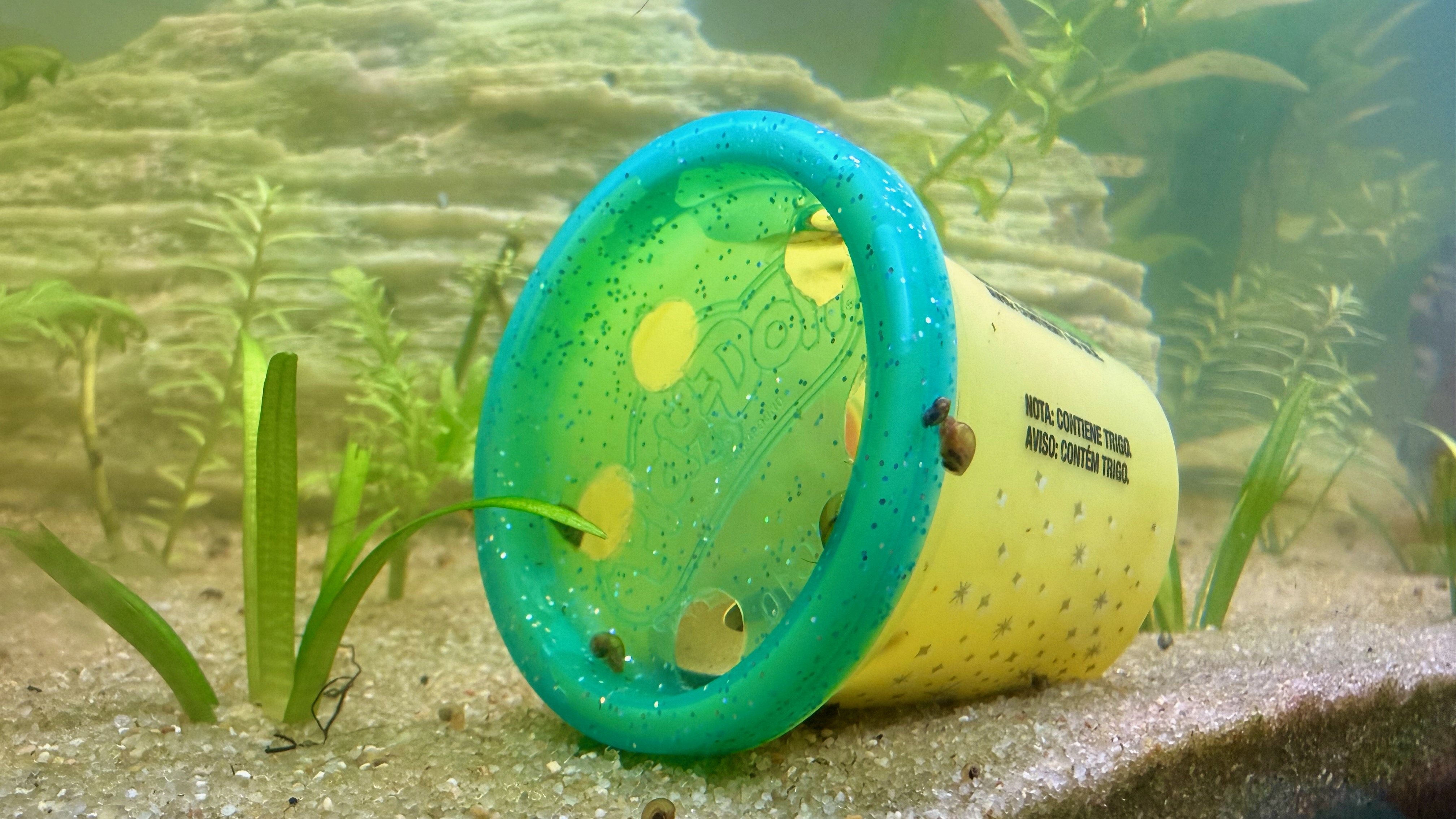
Our DIY snail trap - container with holes and bottom feeder food as bait
We’re not trying to eliminate them—just control the population. A few bladder snails are beneficial. Sixty is too many. We’re aiming for maybe 10-20 adults max.
The ramshorn snails and limpets are staying. They breed slower and haven’t overpopulated.
Current Livestock Count
| Species | Count | Status |
|---|---|---|
| Nerite snails | 2 | Healthy, grazing |
| Bladder snails | 60+ | Trapping in progress |
| Ramshorn snails | Several | Keeping |
| Limpet snails | 10+ | Keeping |
| Copepods | Many | Thriving |
| Rhabdocoela worms | 1+ | New sighting |
The rhabdocoela is a new addition to our microfauna family—a small, harmless flatworm that feeds on detritus and microorganisms. Another sign that the ecosystem is maturing.
Water Parameters
| Parameter | Result |
|---|---|
| Ammonia | 0 ppm |
| Nitrite | 0 ppm |
| Temperature | 75°F |
Cycle confirmed stable. Ready for fish.
Lessons from Two Weeks Away
-
Walstad tanks are resilient. Heavy planting + established cycle = self-sustaining ecosystem. The tank handled two weeks without intervention (minus the algae bloom we caused ourselves).
-
Remote monitoring is invaluable. Without the webcam, we wouldn’t have known about the green water until we got home. Being able to turn off lights remotely gave us options.
-
Blackouts work. Five days of darkness killed the suspended algae without harming plants or snails. Classic technique, proven effective.
-
Floaters are algae competitors. The Water Lettuce tripling wasn’t just good luck—it was the plants outcompeting algae for nutrients. More floaters = less algae.
-
Position your heater low. Evaporation happens. If your heater is near the top, it can end up exposed. Ours stayed submerged because we put it at the bottom.
Next Steps
This week:
- Daily snail trap maintenance
- Monitor water clarity (should continue improving)
- 25% water change once water fully clears
- Resume normal siesta lighting schedule
Soon:
- Start fish stocking once tank stabilizes
- First up: 6 Pygmy Corys
- Then: 8 Ember Tetras
- Finally: 10 Cherry Shrimp
The tank made it through the trip. The cycle held. The plants thrived. We lost one snail but gained sixty others. On balance? We’ll take it.
Time to start thinking about fish.
Status: Day 51 - Back from trip - Cycle stable - Blackout successful - Snail trapping in progress