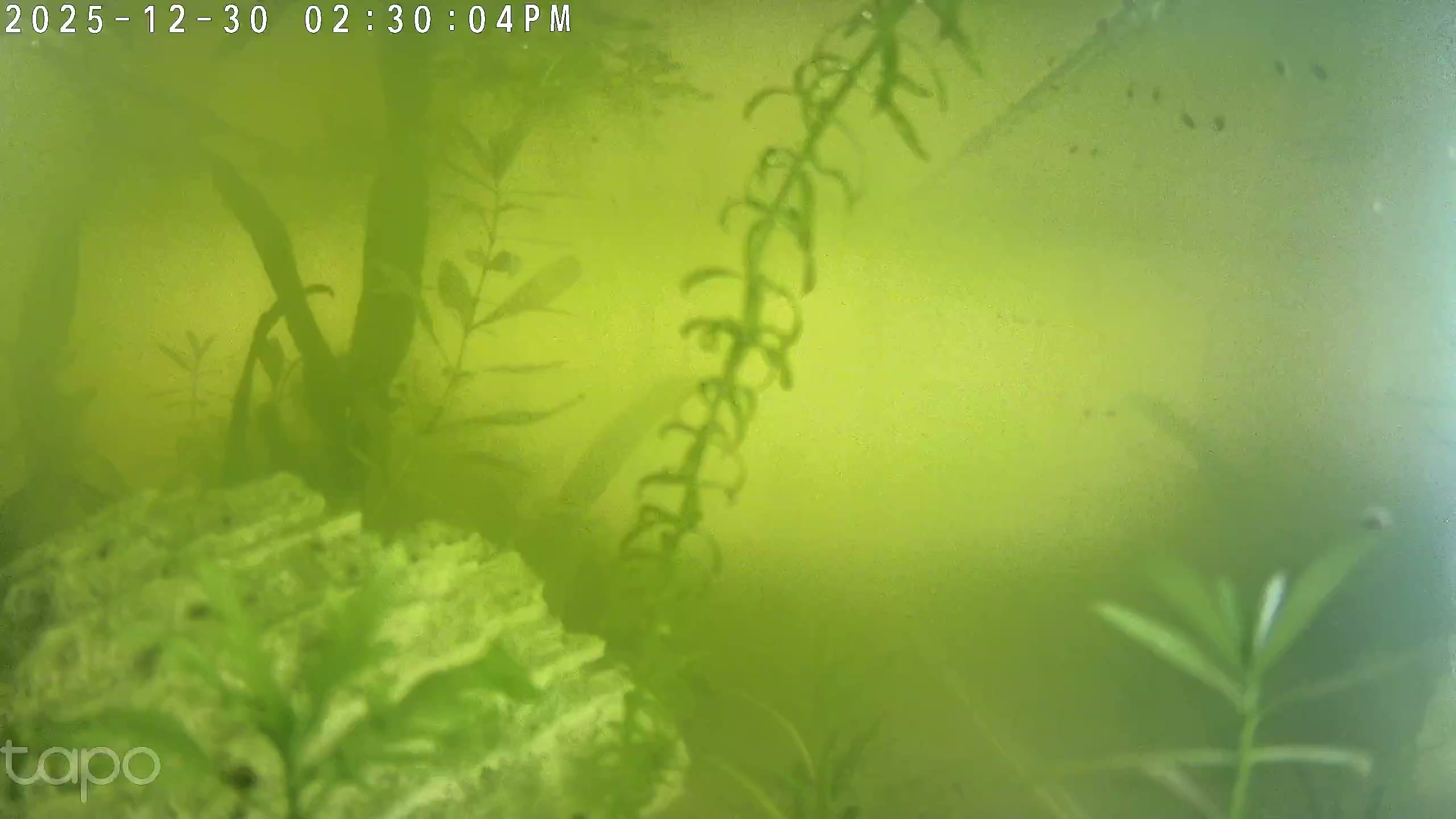
We’re 700 miles from home, watching our tank turn into pea soup through a webcam. Here’s what happened—and what we’re doing about it remotely.
The View from Here
That green haze isn’t a camera filter. It’s millions of single-celled algae suspended in the water column—a classic “green water” bloom. Through the murk, we can just barely make out the coral hardscape and some plant silhouettes.
When we left on December 19th (Day 36), the tank had a surface algae problem but the water was clear. Eleven days later, it’s pea soup.
What Went Wrong
A few factors combined to create perfect conditions for suspended algae:
1. The fertilizer mistake (Day 24): We added 2ml of Fluval fertilizer for struggling floaters. The tank didn’t need it—Walstad soil provides plenty of nutrients. That excess fertilizer has been fueling algae growth ever since.
2. Siesta lighting wasn’t enough: We implemented a split photoperiod (7:30-10:30 AM, break, 1:30-4:30 PM) to combat algae. It helps with surface algae, but suspended algae in the water column still gets plenty of light exposure as water circulates.
3. No water changes for 12 days: The tank has been running hands-off since we left. Normally fine for a cycled Walstad, but with excess nutrients already in the system, there was nothing to remove the algae’s food source.
4. Evaporation concentrated everything: Water level dropped enough that our circulation pump stopped working—the intake is above the water line. Less water volume means more concentrated nutrients.
What We Can See
Despite the green curtain, we can make out:
- Plants are alive: The Water Wisteria fronds are visible and appear healthy. Stem plants on the left show good growth. The Water Lettuce on the surface seems fine.
- Coral hardscape: Still there, still covered in the same spots as before.
- Movement: Occasionally we see what might be snails moving across the glass.
What we can’t see: individual snails, substrate, smaller plants, or really anything with detail.
The Remote Fix
We can’t do a water change from here. We can’t add a UV sterilizer. We can’t manually remove anything. But we can control one thing: the lights.
The plan: Complete blackout until we return (January 3rd).
We remotely turned off the tank lights entirely. Five days of total darkness will:
- Kill the suspended algae: Without photosynthesis, the algae cells will die and settle to the bottom
- Spare the plants: Established plants can survive 5-7 days without light—they have energy reserves
- Let snails keep working: The 40+ bladder snails and 3 Nerites don’t need light to graze
We also turned off the circulation pump since it’s not circulating anyway (water level too low). The tank is now running on just the heater.
Why We’re Not Panicking
Green water looks alarming but it’s actually one of the least harmful algae problems:
- Not toxic: Unlike blue-green algae (cyanobacteria), green water won’t harm fish or invertebrates
- Snails don’t care: Our cleanup crew is probably thriving—more algae means more food
- Plants benefit: Suspended algae competes with plants for light, but it also absorbs the same excess nutrients. Once it dies, those nutrients are removed from the system.
- The cycle is intact: Beneficial bacteria live in the substrate and filter media, not the water column. Our nitrogen cycle should be fine.
Some fish breeders actually cultivate green water intentionally—it’s excellent food for fry.
What Happens Next
Days 47-51 (now until January 3rd):
- Tank in complete darkness
- Algae dies and settles
- Plants survive on reserves
- Snails keep grazing
- Water evaporation continues (heater at bottom should stay submerged)
Day 52 (January 3rd) - When we return:
- Assess the damage (hopefully: cloudy/gray water with settled dead algae)
- Top off water level immediately
- Restart circulation pump
- Do a 30-50% water change to remove dead algae
- Test parameters (confirm cycle held)
- Resume siesta lighting
- Consider UV sterilizer if green water returns
If this doesn’t work: We’ll look into a UV sterilizer (~$30-40). They clear green water reliably within a week and prevent recurrence.
Lessons Learned (Again)
-
Don’t add fertilizer to a Walstad tank during cycling. We knew this. We did it anyway. We’re still paying for it.
-
Green water can develop fast. Clear water on Day 36 became pea soup by Day 47.
-
Remote monitoring is invaluable. Without the webcam, we wouldn’t know anything was wrong until January 3rd. Now we can at least attempt a fix.
-
The blackout trick works. This is a well-established method for green water. We’ll report back on results.
The Silver Lining
This is probably the best possible time for a green water bloom:
- No fish in the tank yet (they’d be fine, but still)
- Snails are hardy and won’t be affected
- We have a clear fix available (blackout)
- We haven’t invested in fish/shrimp stocking yet
- It’s a learning experience before the tank is fully stocked
If we had to pick a tank problem to have while away from home for two weeks, “too much algae” is pretty manageable. The cycle is complete, the snails are working, the plants are growing. We just need to knock back the green water bloom.
See you on the other side.
Status: Day 47 - Green water bloom in progress - Blackout mode activated - Returning January 3rd