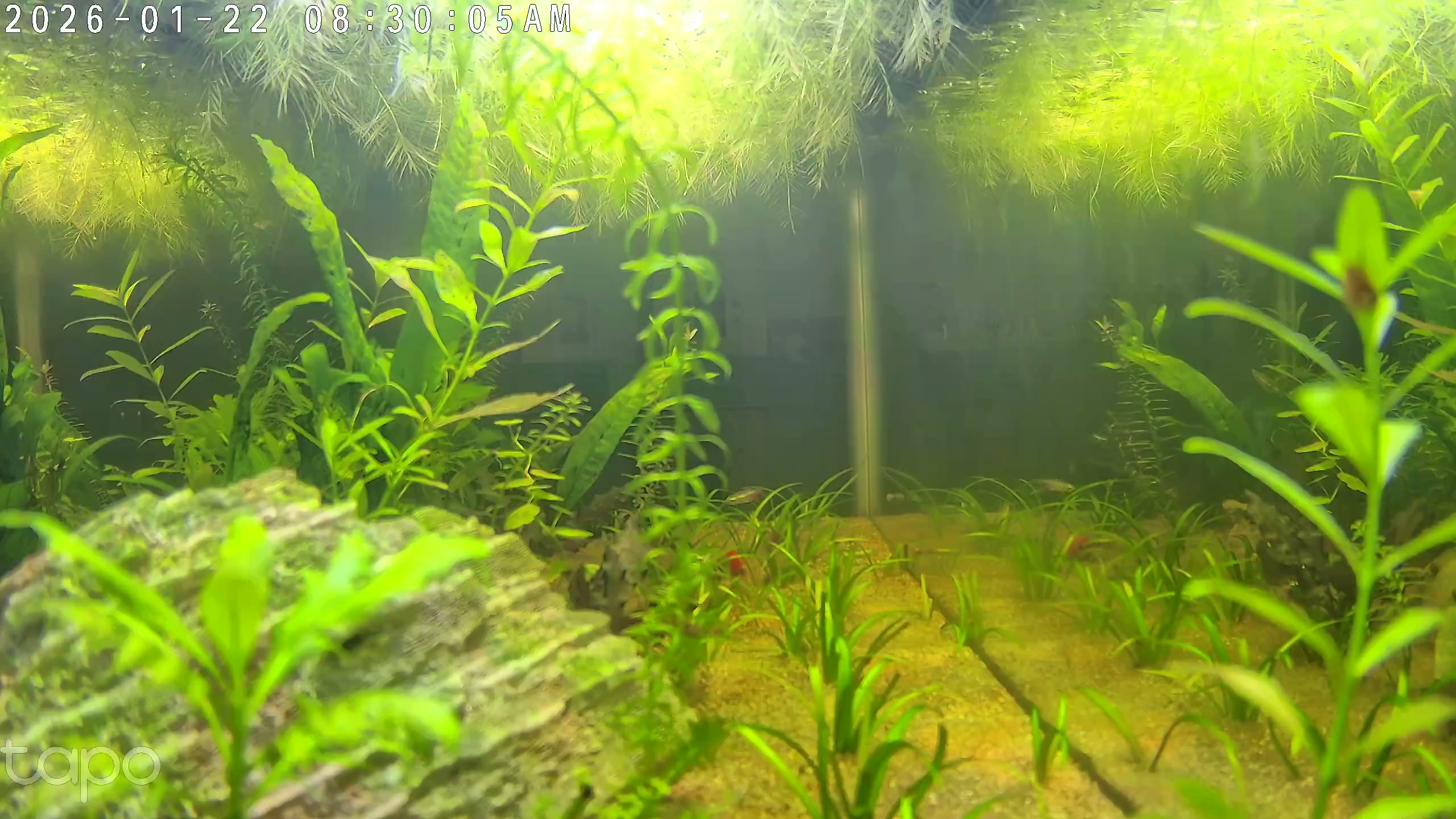
The UV sterilizer cleared the green water. But when we could finally see the tank clearly, we noticed we were two fish short.
The Green Water Victory
After 11 days of running the UV sterilizer 24/7, the pea soup is finally gone. We can see through to the back wall. The plants have distinct shapes. And most importantly, we can actually watch our fish swim.
The blackout didn’t work. The UV sterilizer did. Sometimes technology beats patience.
Before vs. After:
| Day 47 | Day 70 |
|---|---|
| Pea soup | Crystal clear |
| Couldn’t see 6 inches in | Can see the back wall |
| Fish? What fish? | There they are! |
The Missing Fish
With clear water came a discovery: we only have 8 neon tetras. We added 10.
At first, I thought maybe they were hiding. Neons are small, and we have a lot of plants. But after watching the tank for a while, counting and recounting, the math doesn’t lie. Two fish are gone.
What probably happened:
Acclimation losses. It’s common to lose 1-2 fish from a new batch, especially in the first week. Transport stress, temperature shock, or underlying health issues from the store can all take their toll. The fish that make it through the first week usually thrive.
Where are the bodies?
Gone. Completely consumed by the cleanup crew.
This is actually the ecosystem working as intended. We have:
- ~20+ bladder snails
- Several ramshorn snails
- 2 nerite snails
- Various microfauna
A small dead neon would be found and consumed within hours. By the time we noticed fish were missing, there was nothing left to find. No ammonia spike, no decomposing body polluting the water. Just… efficient recycling.
It’s a bit unsettling to think about, but this is exactly what happens in nature. Nothing goes to waste.
The Remaining Eight
The 8 surviving neons are doing well. They school together when startled, spread out to explore when comfortable, and race to the surface at feeding time. Their colors are vibrant—that iconic blue stripe practically glows under the tank lights.
Losing 20% of a new batch isn’t ideal, but it’s within normal range. The fish that survived the first 11 days should be with us for years.
The Snail Situation
Speaking of the cleanup crew… the bladder snails are everywhere.
We trapped about 40 back on Day 53, bringing the population from 60+ down to around 20. But they’ve been busy. The tank is crawling with them again—on the glass, on the plants, on the coral, everywhere.
The Walstad perspective:
These snails exist because there’s food for them. They eat:
- Algae
- Decaying plant matter
- Uneaten fish food
- Dead fish (as we’ve just learned)
Their population will naturally regulate based on available resources. As the tank matures and excess nutrients are consumed, the snail population should stabilize. Boom-bust cycles are normal.
That said, “too many to count” is pushing the limits of our patience. We’re bringing in reinforcements: assassin snails. More on that below.
Current Status
| Metric | Status |
|---|---|
| Water clarity | Clear |
| Neon Tetras | 8 (down from 10) |
| Nerite Snails | 2 |
| Bladder Snails | Too many to count |
| UV Sterilizer | Can reduce/turn off |
| Days since setup | 70 |
What’s Next
Immediate:
- Reduce UV sterilizer to a few hours per day (or turn it off entirely)
- Continue feeding routine (small amounts, once daily)
Coming Soon: New Livestock Order
We’re planning to order:
- 20 Cherry Shrimp - A proper colony-sized batch. With heavy plant cover, enough babies should survive neon predation to establish a breeding population.
- 3 Assassin Snails - The long-term solution for bladder snail control. They’ll slowly work through the pest snail population without becoming pests themselves (they breed very slowly).
Why not Pygmy Corys? They’re impossible to find right now. Local stores don’t have them, no ETA. We’ll add them later if they ever show up.
Water hardness note: Our soft water (3 dGH) is on the lower end for shrimp molting. The dead coral hardscape should help by slowly leaching calcium. We’ll monitor for molting issues and add cuttlebone if needed.
The Bigger Picture
Seventy days in, and the tank is finally what we imagined when we started. Clear water, healthy plants, fish swimming through the stems, snails doing their thing. The journey included:
- A 35-day cycle with an extended nitrite plateau
- Major plant losses and replacements
- A green water bloom that survived a blackout
- Two fish that didn’t make it
But here we are. A functioning Walstad ecosystem. The plants are growing, the fish are thriving (well, 8 of them), and the tank mostly takes care of itself.
That’s the whole point of the Walstad method: build a balanced ecosystem and let nature do the work. Sometimes nature includes dead fish getting eaten by snails. It’s not pretty, but it’s real.
Day 70. 8 neons. Clear water. Too many snails. Life in the tank continues.