Every aquarium journey comes with lessons—some from research, some from experience, and some from mistakes we wish we hadn’t made. Here’s what we learned during our first 33 days of cycling a Walstad tank.
What Worked Well
Heavy Planting from Day One
Our 41-47 plants created a successful “silent cycle” for the first two weeks. Ammonia stayed low because the plants absorbed it directly, competing with bacteria. If you’re starting a Walstad tank, don’t skimp on plants.
Soft Water for the Win
Our tap water tested at 3 dGH (general hardness)—perfect for our planned fish (Cardinals, Chilis, Pygmy Corys). We lucked out here, but it’s worth testing your water before choosing fish species.
Adding Nerites Early
We added our 3 Nerite snails on Day 13, earlier than traditional advice suggests. They handled the cycling conditions well and gave us valuable feedback—when they cluster at the surface, something’s wrong.
Patience During the Plateau
The nitrite plateau lasted 9+ days at 5.0 ppm. It was frustrating, but we resisted the urge to “fix” it with chemicals or major interventions. The biology eventually sorted itself out.
Embracing the Hitchhikers
When we discovered bladder snails and ramshorns hiding in our tank, our first instinct was to remove them. Instead, we decided to keep them as a free cleanup crew. They’re helping with our algae bloom and will be easy to manage once the tank is established.
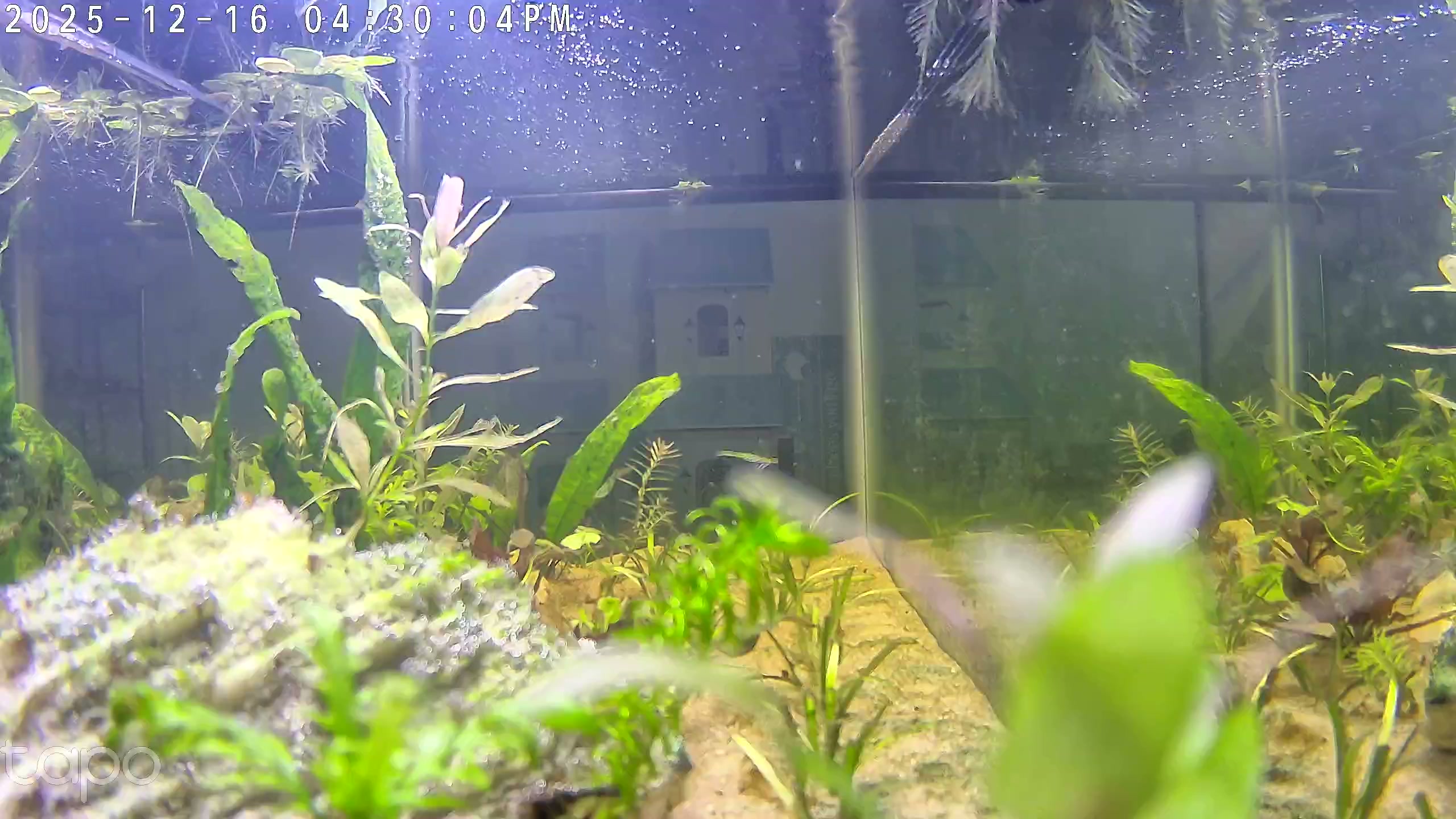
Day 33 - After all the lessons learned, the tank is thriving
Mistakes We Made
Mistake #1: Adding Fertilizer During Cycling
What happened: On Day 24, our Red Root Floaters looked stressed. We added 2ml of Fluval fertilizer thinking they needed nutrients.
The result: An algae bloom that we’re still dealing with two weeks later. The floaters died anyway—they were stressed by water turbulence, not nutrient deficiency.
The lesson: Walstad tanks don’t need supplemental fertilizer. The soil provides everything. Plant struggles during cycling are usually from physical conditions (light, flow, nitrite stress), not nutrients.
Mistake #2: Wave Maker Placement
What happened: Our wave maker created strong surface current that battered our Red Root Floaters constantly.
The result: Most floaters died. We eventually removed the wave maker entirely.
The lesson: Floating plants need calm surface water. If you want surface agitation for oxygen, use a gentle air stone or position the wave maker to avoid disturbing floaters. Or use a surface skimmer that creates bubbles without horizontal flow.
Mistake #3: Choosing Delicate Plants for Cycling
What happened: We chose Red Root Floaters and Anacharis for our initial planting. Both are relatively delicate species.
The result: Extended high nitrite (5.0 ppm for 9+ days) killed most of them.
The lesson: For cycling, choose tough plants: Hygrophila, Pennywort, Water Lettuce, Java Fern, hardy Crypts. Save the delicate species for after the tank is established.
Mistake #4: Not Finding All the Hitchhiker Eggs
What happened: We removed two adult bladder snails on Day 24 but missed their eggs.
The result: 24+ baby snails hatched and are now growing in our tank.
The lesson: If you want to prevent hitchhiker snails, you need to inspect for eggs daily. They’re tiny and easy to miss. Alternatively, just accept that some will get through and manage the population later.
What to Expect
Cycle Length
Our heavily planted Walstad tank took 33+ days to cycle. This is longer than the typical 2-4 weeks some sources cite. The extended nitrite plateau added time, but every tank is different.
Expect: 4-6 weeks for a Walstad cycle. Don’t rush it.
The Nitrite Plateau
Our nitrite stuck at 5.0 ppm for 9+ days. This is apparently common. The NOB bacteria (which process nitrite) are slower to establish than the AOB bacteria (which process ammonia).
Expect: A nitrite plateau is normal. It will break eventually.
Plant Melt
Our Amazon Swords and Crypts melted significantly during their adjustment period. The Crypts lost almost all their original leaves.
Expect: Plant melt is normal. The crown and roots survive. New leaves will grow adapted to your water conditions.
Algae During Cycling
We experienced brown diatom film (normal) and a green algae bloom (caused by our fertilizer mistake). Some algae during cycling is common.
Expect: Temporary algae is normal. Snails help. A balanced ecosystem will control it eventually.
Microfauna Explosion
By Day 30, we had copepods, detritus worms, and hitchhiker snails throughout the tank. These appeared without us adding them.
Expect: Life finds a way. Microfauna are beneficial and indicate a healthy ecosystem.
Equipment Learnings
Heater at the Bottom
We positioned our heater near the bottom of the tank. This means even during evaporation, it stays submerged. Important for long trips when you can’t top off water.
Light Timer is Essential
8-10 hours of light per day, consistently. A timer removes the guesswork and prevents algae from irregular lighting.
Surface Skimmer Over Wave Maker
For oxygenation without destroying floaters, a surface skimmer works better than a wave maker. It creates bubbles and removes surface film without horizontal current.
Test Kit is Non-Negotiable
The API Freshwater Master Test Kit was essential. We used it constantly during cycling. Strip tests might be convenient, but liquid tests are more accurate when you’re making decisions based on the results.
Advice for Future Walstad Keepers
- Plant heavily from day one - More plants = easier cycle
- Choose hardy species for cycling - Save delicate plants for later
- Skip the fertilizer - The soil provides everything
- Be patient with nitrite - The plateau is real, but it will break
- Trust the process - Walstad works when you let it work
- Embrace the hitchhikers - Snails and microfauna are helpers, not pests
- Keep notes - A maintenance log helps you see patterns and progress
- Don’t panic over plant melt - It’s normal and temporary
What’s Next
Our cycle should complete around December 19-21. Then:
- Fish in January (after our trip)
- Cardinal Tetras first, then Cherry Shrimp
- Chili Rasboras after the shrimp establish
- Pygmy Corys to complete the community
The hard part is almost over. The fun part—watching our fish explore their underwater jungle—is about to begin.
This post will be updated as we continue to learn from our Walstad journey.